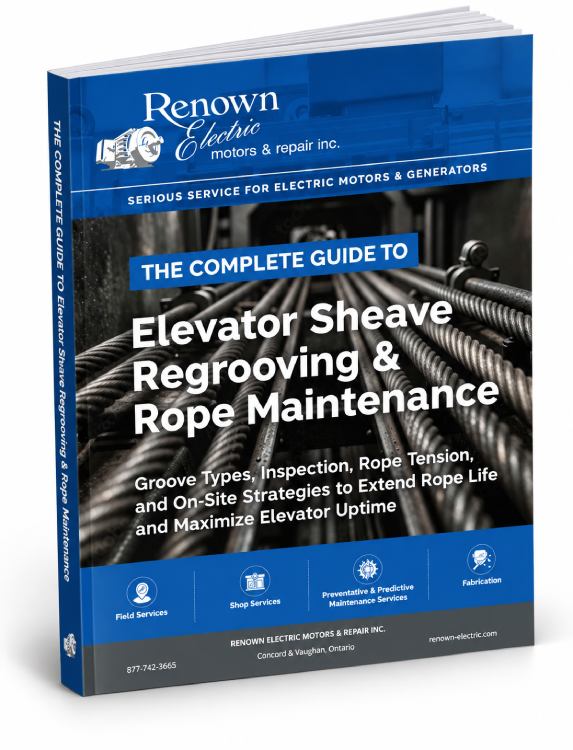
The Complete Guide to Elevator Sheave Regrooving & Rope Maintenance
Elevators have become one of the hardest-working systems in any building. Riders expect a car to arrive quickly and run smoothly every time, and that puts heavy demands on the drive sheave and the hoist ropes riding in its grooves. When the grooves and ropes are in good condition and share the load evenly, an elevator runs efficiently, safely, and quietly. When they aren’t, the costs add up fast: faster wear, early rope replacement, rough rides, and unplanned downtime.
Machine-room-less designs, more aggressive groove profiles, and near-continuous use have made today’s installations harder on hoist rope than ever. Sheaves that once needed regrooving only once in their service life now need it far more often. That’s why Renown Electric’s elevator specialists created this free guide, drawing on real field and shop work to help you get more uptime, longer rope life, and fewer surprises.
Inside the guide, you’ll learn:
- Why higher usage and machine-room-less designs are so hard on hoist rope
- How U-groove, Undercut U, and Progressive V sheaves trade rope life against traction, and what that means for how often you service them
- How to recognize common wire rope damage patterns and check the fit between rope and groove
- Renown Electric’s annual sheave inspection and regrooving process, step by step
- How hydraulic rope equalizers fix uneven tension to extend rope life and improve ride quality
- How to build a proactive maintenance program, done mostly on site, that cuts downtime and long-term cost
Fill out the form below to get your free copy:
"*" indicates required fields